
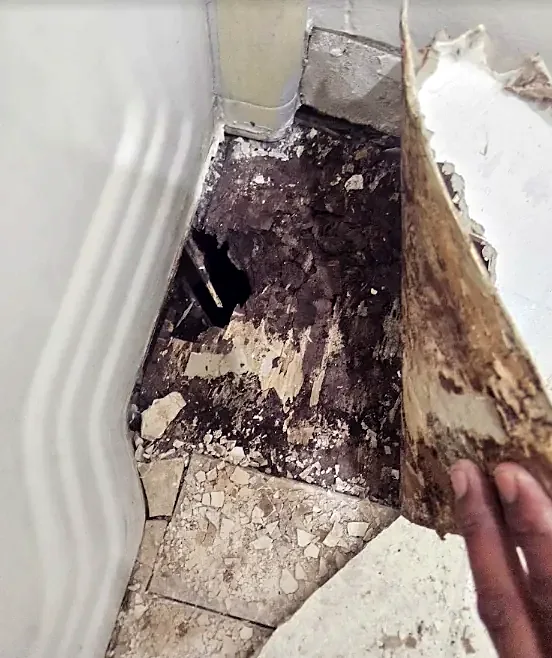
Most hardwood damage can be repaired without replacing the whole floor. Scratches get touched up. Damaged boards are cut out, new ones are laced in, and the whole floor is sanded so the repair disappears. Termite, water and rot damage mean replacing boards and sometimes the subfloor underneath. La Cumbre repairs boards and subfloors across Santa Barbara and Ventura Counties, down to a single scratch. Estimates are free.
Repair, refinish or replace?
| What you see | Usual fix |
|---|---|
| Dull finish, light scratches | Screen and recoat, or a polish and top coat |
| Deep scratches and gouges | Touch-up, then refinish if the whole floor is worn |
| Pet stains that went into the wood | Sand and bleach if shallow. Replace boards if dark and deep. |
| Holes, pellets, or soft or hollow boards | Pest inspection, then cut out and replace the damaged boards |
| Cupped, crowned or buckled boards | Find and fix the moisture first. Buckled boards must be replaced. |
| Gaps between boards | Often seasonal. Wait for humidity to return before judging. |
| Mixed or mismatched colors | Tint or restain so the rooms read as one floor |
| Squeaks | Re-fasten from above or below; sometimes a subfloor issue |
Scratches and worn spots
Light scratches in the finish can be buffed and recoated. Deeper ones are touched up first. One La Cumbre customer wrote that the crew did a beautiful job touching up some pretty significant scratches on their hardwood floors. That review is on the reviews page. Harder woods and lower sheens hide wear better, which matters if you have dogs. The smallest job Tony takes is a single scratch touch-up.
Replacing boards so you can’t see it
A patch of new boards stands out if it is just dropped in. The trade method is lacing, also called weaving. The undamaged rows next to the repair are lifted, new and old boards are mixed together, and then the whole floor is sanded and finished. In one published example, the contractor pulled boards back 18 inches from the damage, and the repair was undetectable. New wood never matches old exactly, which is why the final sanding and color blending matter.
Termite damage
The University of California IPM program says western drywood termites are common along the Pacific coast of Southern California. They live inside dry wood above ground. The telltale sign is small six-sided pellets pushed out of kick-out holes, under 2 mm across. Subterranean termites are different: they keep contact with soil and build mud tubes.
- Deal with the termites first. Treatment is a pest-control job (fumigation, heat or local treatment), not a flooring job.
- Then repair the floor. Eaten boards are cut out and replaced and the subfloor is repaired. In the trade, new wood is often laced into the old so the repair blends. Ask Tony how he handles yours.
The cost depends on how far the damage runs: a few boards, a whole room, or the subfloor and joists under it. Treatment of the termites themselves is a separate pest-control job, done before the floor is repaired.
Water damage, cupping and gaps
- Cupping is when the edges sit higher than the middle. It means the board has more moisture on the bottom than the top, or less in the air than in the wood.
- Crowning is the reverse: a high center. It often shows up when a still-wet cupped floor was sanded flat. Wet floors should not be sanded until they have dried, which can take weeks.
- Buckling is when boards lift off the subfloor. NWFA says buckled floors need replacing.
- Gaps open in dry winter heating and close again as humidity returns. That is normal movement, not damage.
Mold becomes a risk above about 15 percent moisture in the wood, fasteners corrode above about 18 percent, and rot starts near 28 to 30 percent (NWFA). Fix the source of the water before any floor work.
Pet scratches and stains
Light scratches fill with a stain marker. Deeper gouges get filler, sanding, stain and sealer. Old urine stains can be sanded and bleached when shallow. If they are dark and deep and reached the subfloor, those boards need replacing. Matte finishes and harder woods show less.
Subfloor and squeaks
Squeaks come from boards rubbing on fasteners or a loose subfloor. Most squeaks stop when the boards or the subfloor are fastened down again. A damaged subfloor is cut out and replaced. La Cumbre repairs subfloor along with the boards, and removes old hardwood when a floor is beyond saving.
When the wood doesn’t match
Additions, past repairs and refinishing in different decades leave a mix of species and colors in one house. The fix is to sand everything to bare wood and use a tint so it blends. See color and mixed woods.