
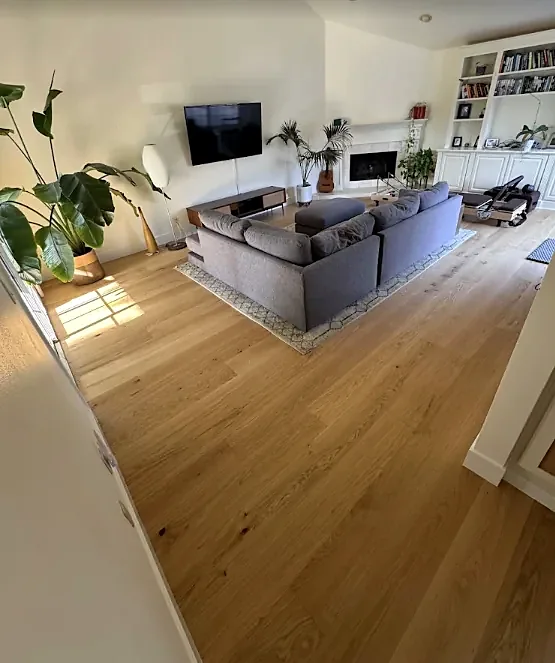
Sweep or vacuum often, wipe spills right away, clean with a pH-balanced wood floor cleaner on a barely damp mop, and put felt pads under furniture. Skip steam mops and vinegar. Keep indoor humidity between 30 and 50 percent. When the floor loses its luster, it is time for a recoat, which usually costs less than a full refinish.
Everyday cleaning
- Vacuum or sweep. Grit scratches finish. Use the hard-floor setting and no beater bar.
- Wipe spills at once. Water left standing gets into seams.
- Damp, not wet. Use a damp microfiber mop and a pH-balanced cleaner made for wood floors. One NWFA author says never wet-mop. A 2025 NWFA piece says damp-mopping is fine. So keep the mop barely damp and dry the floor right after.
- Doormats. A mat at each door stops most grit.
What to avoid
- Steam mops. NWFA says the industry does not recommend steam on wood floors. Steam forces water into seams and can cloud or peel the finish and void a warranty.
- Vinegar. It is acidic and can dull the finish.
- Bleach, ammonia and string mops. Too harsh or too wet.
- Waxes and oils from the grocery store. They can stop a recoat from sticking. Leave oils and waxes to a pro.
- Rubber-backed rugs and hard plastic furniture feet. They can mark or stain the finish. Use felt.
Humidity
NWFA recommends 30 to 50 percent relative humidity and 60 to 80 degrees year round. Wood swells when the air is damp and shrinks when it is dry. Under dry winter heating, small gaps open between boards, then close in spring. That movement is normal. If you see gaps all year, or board edges rising, call. A cheap humidity gauge from a hardware store shows your level. Use a humidifier in winter and a dehumidifier in damp stretches.
On this coast the marine layer brings damp mornings, and strong sundowner winds can drop humidity to around 10 percent. The National Weather Service recorded that above Montecito in 2008. See the air on this coast.
Sunlight
Sun changes the color of wood. Cherry and some imported woods darken. Maple, walnut and oak lighten. A rug left in one spot for years leaves a pale or dark outline. Move rugs and furniture now and then. Window film that blocks UV can slow the change.
Pets
Keep nails trimmed. Wipe accidents at once, since urine that sits can go through the finish and darken the wood. Matte or low-sheen finishes and harder woods show scratches less.
When to recoat
NWFA gives no fixed schedule. Recoat when the floor loses its luster or shows wear along walking paths. A screen and recoat adds a fresh top coat without sanding the wood. Wait until the finish wears through to bare wood, and you need a full refinish. See screen and recoat.
If water gets on the floor
- Stop the source and pick up standing water.
- Dry with towels and fans.
- Call a flooring contractor if you see cupping, lifting or dark stains. Cupped floors should dry fully before anyone sands them, which can take weeks.